After updating Google Fred, SEO tips differed about backlinks
The world of SEO never stays still, and when it comes to updating Google Fred, the rules are even trickier. Since the Fred update first rolled out, digital marketers and site owners have noticed massive differences in how their websites perform. Some websites flourished, while others disappeared from search results overnight due to changes in backlinks advantages and overall link-building strategies.
What makes Fred unique is that it specifically targets websites that focus more on ads and quick monetization rather than genuine value. In the years since its release, experts have debated which SEO strategies work best after updating Google Fred, and opinions often differ. Some argue that backlinks still hold power, while others stress content depth or page speed as the ultimate ranking factor.
For today’s SEO landscape, one thing is certain: if your site isn’t user-friendly, fast, and packed with value-driven content, you risk being penalized. This article will break down exactly what changed after updating Google Fred, highlight the SEO tips that matter most, and show you practical steps to keep your site ranking well. And if you want a quick overview, check this video: watch here.


Best SEO Tips After Updating Google Fred
1. Review Your Content Thoroughly
Identify thin or duplicate pages.
Merge weak articles into comprehensive guides.
Update old posts with fresh, original insights.
2. Prioritize User Experience
Keep your site design clean and simple.
Limit intrusive pop-ups and distracting ads.
Ensure fast navigation and clear formatting.
3. Balance Ads and Monetization
Avoid stuffing pages with ads above the fold.
Keep affiliate links transparent and relevant.
Use ads responsibly so they support—not harm—content.
4. Focus on Backlink Quality
Build links from trusted, niche-relevant websites.
Disavow harmful or spammy backlinks.
Keep anchor texts natural, not forced.
5. Improve Technical SEO
Compress images and minify files to speed up load time.
Monitor Core Web Vitals: LCP, CLS, and FID.
Test mobile responsiveness regularly.
6. Boost Engagement Metrics
Track bounce rate and time on page.
Add internal links to keep readers browsing.
Make content engaging with visuals, lists, and examples.
7. Plan for Recovery if Penalized
Use analytics to detect ranking drops.
Revise content and reduce ad clutter.
Rebuild trust with fresh updates and link audits.
What Is Google Fred & Why the “Updating Google Fred” Debate Matters
When we talk about updating Google Fred, we mean adapting SEO strategies to align with Fred’s principles. Fred, introduced in 2017, cracked down on low-quality websites — particularly those stuffed with thin content, excessive ads, or aggressive affiliate links. To stay ahead, many marketers turned to stronger fundamentals like SEO basics to ensure long-term rankings.
The problem? Fred wasn’t formally documented by Google. Instead, site owners had to learn from traffic drops and industry insights. That’s why advice differs: while some swear by long-form, keyword-rich content, others say performance and UX are the real keys.
In short, updating Google Fred isn’t just about fixing ads or backlinks. It’s about adopting a sustainable SEO mindset that prioritizes users first and avoids shortcuts.
Key Areas Where SEO Tips Differ After Updating Google Fred
Content Depth vs. Quantity
Before Fred, publishing dozens of short posts could get you ranked. After updating Google Fred, thin content is a liability. Google now favors in-depth, unique, and helpful content that satisfies user intent.
Ad Placement & Monetization
Sites overloaded with banner ads, pop-ups, or affiliate links were hit hardest by Fred. Today, you need a clean, user-friendly layout. Ads should enhance the page, not dominate it.
Backlink Strategy
Quantity once ruled backlinks. Now, it’s all about quality and relevance. Updating Google Fred made it clear that spammy links can tank rankings.
Technical Performance
Speed, mobile responsiveness, and Core Web Vitals are non-negotiable. Sites that lag behind in technical SEO may face penalties, no matter how great their content is.
How to Recover If Your Site Was Hit
Many site owners only realize the impact of Fred when rankings plummet. If that’s you, here’s a roadmap to recovery:
Check Analytics: Identify when and where traffic dropped.
Revamp Content: Update weak articles or merge them.
Fix Monetization Issues: Reduce ad clutter and make layouts user-friendly.
Improve Technical SEO: Speed up your site and fix broken pages.
Clean Up Backlinks: Disavow spammy links and pursue reputable ones.
Recovery takes patience, but with consistent improvements, sites can regain — and often surpass — their old visibility.
Why Updating Google Fred Still Matters in 2025
Even years later, the Fred principles are alive in Google’s core updates. Every change emphasizes value, usability, and authenticity. Sites that try to “game the system” still risk penalties, while those that focus on users see long-term success.
In 2025, updating Google Fred isn’t just a one-time fix; it’s an ongoing commitment to SEO best practices. Keeping your site aligned with user needs, fast performance, and clean design ensures resilience against future updates.
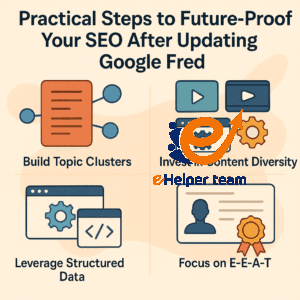
Practical Steps to Future-Proof Your SEO After Updating Google Fred
Relying only on short-term fixes isn’t enough anymore. To stay competitive, you must build a strategy that not only survives today’s search engine rules but also adapts to future updates. Here are practical ways to achieve this:
Build Topic Clusters: Instead of random standalone articles, create pillar pages supported by subtopics. This signals depth and authority in your niche.
Invest in Content Diversity: Add videos, infographics, and interactive tools to enrich user experience. This keeps readers engaged and boosts time on site.
Leverage Structured Data: Schema markup helps Google better understand your content and can increase your chances of earning rich snippets.
Focus on E-E-A-T: Expertise, Experience, Authority, and Trustworthiness are now crucial ranking factors. Showcase credentials, cite reliable sources, and add author bios to strengthen credibility.
These steps ensure your site grows stronger with each algorithm shift, instead of scrambling to recover every time Google rolls out a change.
The Role of Analytics After Updating Google Fred
One overlooked area in SEO strategy is the systematic use of analytics. After updating Google Fred, measuring performance isn’t optional — it’s essential.
Identify User Behavior: Tools like Google Analytics and Search Console reveal how users interact with your content. Look at dwell time, click-through rates, and exit pages.
Track Recovery Progress: If you made updates to comply with Fred’s principles, compare traffic before and after changes to see what worked.
Spot Hidden Issues: Analytics can highlight unexpected problems such as pages with high impressions but low clicks, signaling poor meta descriptions or titles.
Monitor Ad Impact: Review bounce rates on pages with heavy monetization. If users leave quickly, it’s a sign ads are too intrusive.
By making data-driven decisions, you reduce the risk of penalties and continuously align your strategy with what works best for your audience.
Why Content Refresh Cycles Are Vital After Updating Google Fred
Publishing new articles is important, but updating existing content is just as critical. Google favors fresh, relevant pages that reflect the latest information. After updating Google Fred, this became even more apparent:
Regular Updates Build Authority: Pages refreshed every 6–12 months tend to perform better than outdated ones.
Improves User Satisfaction: Visitors trust sites that provide updated statistics, current examples, and new insights.
Boosts Ranking Potential: Content refreshes often trigger Google to re-crawl and re-index pages, improving visibility.
Prevents Keyword Decay: Old articles can lose ranking power over time. Updating them with better internal links and new keyword variants extends their lifespan.
A strong content refresh cycle means your site won’t just rank once — it will maintain authority long term.
Common Mistakes to Avoid After Updating Google Fred
Many site owners unknowingly repeat errors that cost them rankings. Here are mistakes you must avoid:
Overloading with Ads Again: Thinking a small change in ad placement is enough is a trap. If monetization outweighs content, you’ll still be penalized.
Focusing Only on Keywords: Fred prioritizes context and value, not keyword stuffing. Over-optimization can be as harmful as neglect.
Ignoring Mobile Experience: With mobile-first indexing, poor mobile UX guarantees ranking loss.
Chasing Backlink Quantity: Buying hundreds of cheap backlinks won’t help. One quality backlink outweighs dozens of spammy ones.
Neglecting Site Speed: Even amazing content won’t save a site that loads too slowly.
Avoiding these pitfalls ensures your site stays aligned with Google’s long-term expectations.
How Updating Google Fred Shapes the Future of SEO
Beyond the immediate fixes, updating Google Fred set a precedent for how SEO will evolve in coming years. Its legacy lies in pushing the industry toward:
User-Centered Content: Google wants answers, not filler.
Sustainable SEO Practices: No shortcuts; strategies must withstand algorithm updates.
Holistic Ranking Factors: Technical SEO, user experience, and authority are equally important.
Greater Transparency: Sites that mislead users with aggressive ads or fake authority will continue to decline.
In essence, Google Fred wasn’t just a one-time update — it was a wake-up call. The best SEO strategies moving forward are those that align with transparency, speed, and genuine value.
FAQs
Q1: What does “updating Google Fred” mean today?
It means revising your SEO strategy to align with Fred’s quality-driven rules: helpful content, good UX, and responsible monetization.
Q2: Does keyword density still matter after updating Google Fred?
No — keyword stuffing hurts rankings. Focus on natural usage and semantic relevance instead.
Q3: Can affiliate sites survive?
Yes, if they deliver unique insights, helpful comparisons, and balanced monetization instead of thin promotional content.
Q4: How many ads are safe per page?
There’s no set number, but ads must never overshadow content or slow down the site.
Q5: How fast can you recover from a Fred penalty?
Recovery varies — weeks to months — depending on how quickly and thoroughly you fix the problems.
Q6: Should I delete old posts or update them?
Updating is better when possible. Only delete if the content is irrelevant, unfixable, or duplicated.
Conclusion
The debate around updating Google Fred highlights how much SEO has evolved. While some tips differ, the message is clear: quality and user experience win. Whether you’re fighting a ranking drop or future-proofing your site, applying these principles ensures stability and growth in search results — especially when leveraging tools like Ahrefs SEO Tutorial for better keyword and backlink analysis.